

Melvin Udall – As Good As It Gets
I can remember seeing As Good As It Gets in theaters as a teenager and being pleasantly startled by the sight of Jack Nicholson’s Melvin Udall, romcom super grouch. Here’s a bestselling romance author who disdains love, an OCD sufferer who weaponizes his affliction, a New Yorker who hates crowds (who can’t relate?). In one scene, an adoring fan asks Melvin his secret to writing women. “I think of a man, and I take away reason and accountability,” he says, an epic burn forever seared in my brain. Of course Melvin’s anti-charm offensive only goes so far in a James L Brooks project. Before long, the rudeness erodes as Melvin is forced on to a journey of self-discovery with the nextdoor neighbor he can’t abide (Greg Kinnear) and the diner waitress he can’t live without (Helen Hunt). Melvin comes out a changed man in the end, but retains the essence of his super grouch-dom. That was the moment I fell in love with the writer’s life. Andrew Lawrence
Mavis Gary – Young Adult
Things don’t really go as Mavis Gary expected them to in 2011’s acidic black comedy Young Adult. The middling YA ghost-author, borderline alcoholic and “psychotic prom queen bitch” rampages back to her home town so she can save her high school boyfriend Buddy, convinced he’s miserable and desperate for an out (an ugly baby, a cardigan-wearing wife and a “shabby chic” house in the suburbs – just imagine). But it’s Mavis, as played by an astonishingly awful Charlize Theron, who is truly miserable, a stunted, peaked-in-high-school bully who just can’t move on from her long ago heyday. Things don’t really go as we expect either, Diablo Cody’s daring, difficult character study refusing to hand Mavis the redemptive arc we’ve grown accustomed to, taking her close to profound realisation before dragging her back down into darkness. I’ve never grown tired of rewatching Mavis – deluded, drunk and devoid of empathy – stubbornly resist change and betterment. Maybe because there’s something both bitterly realistic and selfishly reassuring about watching someone slide from the relatable (a sneering drive through her anonymous retail park-riddled home town is not not something I have also done) to the tragic (recounting a high school miscarriage and fear that her body is broken) to the fully monstrous (telling Buddy’s warm and accommodating wife that she fucking hates her, akin to watching a puppy get drop-kicked). Mavis might go far, far over the edge, but I never would. Right? Benjamin Lee
Barton Fink – Barton Fink
The Coen brothers have always specialised in dislikable protagonists; all the way back to their debut Blood Simple, it was hard to work out who was more irritating: Frances McDormand’s self-absorbed Abby, John Getz’s gormless Ray, or M Emmet Walsh’s gigglingly self-satisfied private eye Loren Visser. A spin through their back catalogue is a parade of prize pigs: Gabriel Byrne’s duplicitous Tom Reagan in Miller’s Crossing, George Clooney’s smirking Ulysses Everett McGill in O Brother, Where Art Thou?, and Oscar Isaac’s super-irritating folkie in Inside Llewyn Davis. (While not exactly hateful, Michael Stuhlbarg’s Larry Gopnik in A Serious Man is a prime example of what they used to call a wet blanket.) In the spirit of boosting the superb Marty Supreme, I’d like to point out that every one of these films is brilliant – and perhaps in the chef’s kiss of Coen counterintuition, arguably their greatest film contains their most annoying protagonist: Barton Fink. (Even his name is irritating.) Fink is someone who is painfully awkward and overweeningly arrogant, neurotically intellectual and self-centredly unaware, supercilious and chip-on-the-shoulderish, all at the same time. He couldn’t be more dislikeable … and yet, like Marty Mauser, it gives the character a restless, questing energy that makes him a compelling eyeball-magnet for everything that happens. What saves both of them (or “redeems” in the script-readers’ vernacular) is that neither are actively horrible or evil; there’s some spark of morality underneath it all. I suppose we should be grateful for small mercies. Andrew Pulver
Wren – Smithereens
Consider Smithereens the grittier older sister of Desperately Seeking Susan, director Susan Seidelman’s better-known Madonna vehicle. Obnoxious does not begin to accurately describe its hero, Wren, a New Jersey refugee who flees to New York in hopes of making it big in the punk scene. (Doing what, exactly is beside the point.) She’s a charmless social climber who constantly big leagues the only friend she’s ever had, a van-dwelling beatnik type named Paul. Instead, she has her eyes on a fictionalized version of Richard Hell, played by the Voidoid himself (Wouldn’t you?). I give Wren maybe too many passes. I love her fabulous outfits – someday I hope to find a dupe of the fuzzy pink coat she wears waiting for me at a thrift store – and the way she wakes up every morning after ripping her life to shreds the night before. Sure, Wren’s aloof, rude and manic in her desires. Male leads have gotten away with much worse for the eternity of film history. I can’t help but root for her. Alaina Demopoulos
Ingrid Thorburn – Ingrid Goes West
No one can argue that Ingrid, a deeply unwell woman played by Aubrey Plaza in Matt Spicer’s underrated 2017 thriller Ingrid Goes West, does the right things. We meet her fresh out of a psychiatric facility, where she was relegated after pepper-spraying a bride at a wedding she wasn’t invited to, and follow her west, where she latches on to the persona played online by influencer Taylor (Elizabeth Olsen) and wheedles into her avocado toast life. And yet I still root for Ingrid, as she is the personification of a dark and under-explored part of all our internet-addled brains – the part that implicitly understands the precise currency of envy in our culture, that fixates on certain faces, that remembers the exact details of a stranger’s engagement party. That relishes comeuppance, craves validations and burns with corrosive anger when everyone from wannabe influencers to celebrities win the attention economy with obvious falsehoods (Kendall Jenner’s claim that Accutane permanently shrinks your nose? Please.) A part of me gets Ingrid’s quest, her disillusionment and rage. I do not endorse vigilante accountability for the fake and successfully boring, but I do enjoy watching it. Adrian Horton
Patrick Bateman – American Psycho
After many failed attempts to adapt American Psycho into a film – including a cracked screenplay written by Bret Easton Ellis that ended atop the World Trade Center, and potential involvement from David Cronenberg, Brad Pitt, Oliver Stone, and even Leonardo DiCaprio – relatively unknown Mary Harron, fresh off of showing I Shot Andy Warhol at Cannes, completed a screenplay with actor Guinevere Turner and cast Christian Bale as the star. Harron’s satire of toxic masculinity and corporate greed is as dark as they come – there’s the infamous scene of serial killer Patrick Bateman frustratedly trying to figure out how to feed a stray cat to an ATM, and the running joke throughout is that being a sociopathic murderer fails to make him stand out from his colleagues in finance. Bateman’s utter odiousness is essential to the film’s schizoid world, where he robotically delivers a solipsistic monologue on Phil Collins before staging a porn shoot with two sex workers, or where he holds a nail gun to the back of his unknowing secretary’s head while politely toying with seducing her. It’s all in the service of constructing an aesthetic realm that’s nothing but slick surfaces, a film about the loneliness and utter emptiness of sociopathy, the ultimate hell of living in a world where nothing that you do matters at all. There’s a reason Harmon’s feminist revision of the book has steadily gained a cult following as the world has moved through the relatively placid 1990s and into a new Gilded Age ruled by the likes of Elon Musk, Mark Zuckerberg, and Donald Trump. Bale’s Bateman may be utterly unlikable, but he’s far from unrecognizable. Veronica Esposito
Roger Greenberg – Greenberg
Watch certain groups of Noah Baumbach films – his early comedies, his collaborations with Greta Gerwig, or his new movie Jay Kelly – and you wouldn’t particularly think of him as chronicling especially unlikable or even particularly disagreeable characters. Many of them are downright charming. But if you catch him in the right period – most especially between 2005 and 2010 – his movies can seem like endurance exercises for the cringe-averse. That’s particularly true of the title character in his 2010 film Greenberg, played by Ben Stiller. Many Baumbach protagonists struggle with the disappointments of ageing, whether in their teens, 20s, 30s, or Greenberg’s case, mid-40s; Stiller, with his uniquely prickly comic style and talent for getting hung up on the details, turns that struggle into something at once symphonic and redolent of a stubborn, lonely solo. What makes the unemployable-seeming Greenberg, a middling handyman and ex-musician who can barely handle dog-sitting for his brother, so delightful to me is his ill-timed but honest rage bombs, whether carefully set and delivered into the ether (like a series of hilariously petty complaint letters) or thrown with self-conscious self-destructiveness (he modifies “youth is wasted on the young” to “life is wasted on people”). He’s abrasive, self-centered, and caustic in a way that certain viewers will (and I assume Baumbach and Stiller did) find uncomfortably relatable. The film understands that insecure, adolescent impulses don’t always escape through frat-boy immaturity; sometimes they emerge through very real frustrations with the way life defies expectations. Jesse Hassenger
Pansy Deacon – Hard Truths
Pansy Deacon is the sort of brutally unlikable character who finds little, if any, redemption. She remains pretty much awful from the beginning to the end of Mike Leigh’s shattering 2024 character study, Hard Truths. There is a moment of cathartic laughter in the film, and a scene of something like reconciliation between Pansy and her cheerful sister. But otherwise, Leigh and actor Marianne Jean-Baptiste’s frightening creation remains a howling locus of resentment, anxiety, and cruelty. She’s a stunning character, loathsome and only the faintest bit pitiable. Pansy is so vivid in her miserableness that, beyond some critics groups, awards bodies seemingly found it impossible to welcome Jean-Baptiste into their festivities last year. Which was disappointing. But that snubbing was also a testament to the dazzling, exacting craft of Hard Truths. I still find myself thinking of Pansy from time to time, hoping dumbly that she’s found a way out of her malaise, but knowing that she would probably swat away such sentiment with a derisive laugh, or a monologue about how pointless it is to try to care for her. Richard Lawson
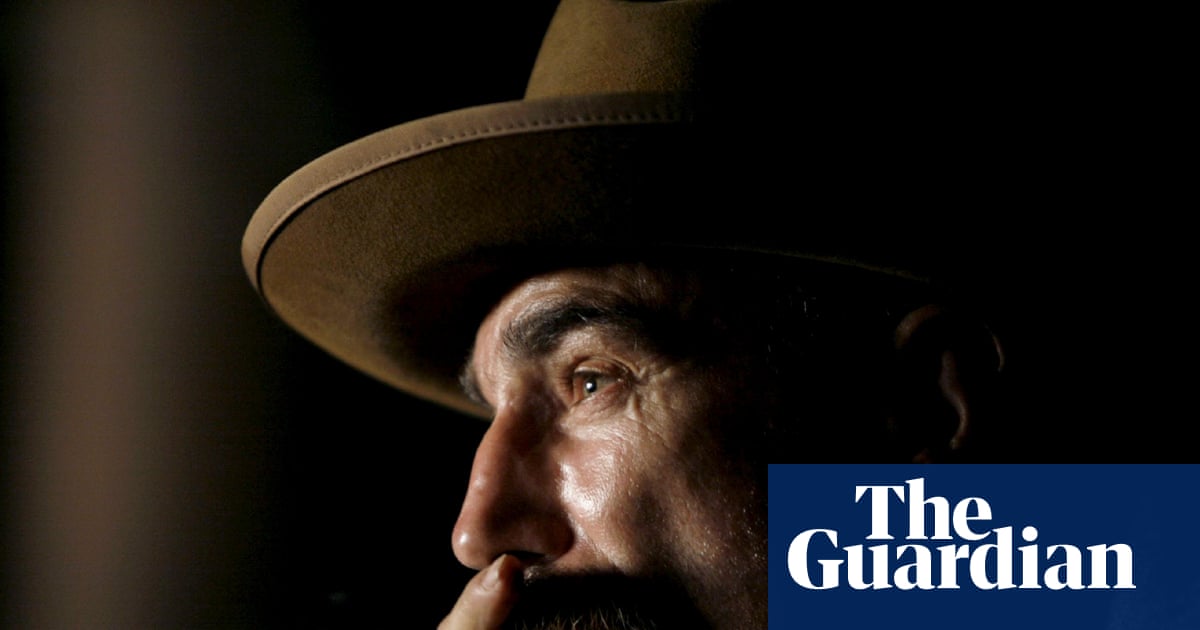
Daniel Plainview – There Will Be Blood
As spirit animals go, Daniel Plainview isn’t one you’d immediately race to adopt from the pound, but there’s something irresistibly bracing about his approach. Rare is the week in which the line “I can’t keep doing this on my own, with these … people” doesn’t pop into my conscious. Yes, he’s flawed – a cold-hearted, child-abandoning, resource-sucking murderer etc etc – but he’s also exhilaratingly focused and honest (clue is in the name). He’s also, just to play literal devil’s advocate, very good at his job, at times a sweet and loving parent, and, when it comes to false prophets at least, bang on the money. Quentin Tarantino thinks There Will Be Blood doesn’t work because of Paul Dano – nuts, of course, because the film isn’t intended as a two-hander (and Dano is great anyway). What’s certain is that the movie wouldn’t work were its tar-hearted antihero not also funny, formidable and – whisper it – relatable. Plus: loves bowling! Catherine Shoard
Charles Foster Kane – Citizen Kane
Charles Foster Kane is the towering blueprint for so many cynical and enduring cinematic figures we are simultaneously enthralled and repulsed by. Think Daniel Plainview in There Will Be Blood or Mark Zuckerberg in The Social Network, characters who exist a century apart, and in Kane’s shadow, embodying an American dream that is insatiable, corruptible, and often fuelled by contempt. For at least half-a-century, Citizen Kane had been widely named the greatest film of all time (chiefly on the Sight & Sound critics poll), largely celebrated for its form (its use of deep focus taught in almost every intro to film class). But the film’s emotional power comes from Orson Welles’s enigmatic portrayal of the predatory and rather pathetic Kane, the media baron inspired by William Randolph Hearst, and admired by Donald Trump. Kane preaches about speaking truth to power, but only insofar as it serves him. His youthful idealism and principles are as thin as and disposable (literally) as the paper they’re printed on. It’s easy to be seduced by his ambitions, not to mention the bluster and silky-smooth charisma he so skilfully weaponizes, before it all sours and curdles; you know, like the American dream. Radheyan Simonpillai
Marla Grayson – I Care A Lot
If Rosamund Pike were standing in front of a decimated building holding a bomb detonator, telling me she didn’t do anything, I could believe her. There’s a je ne sais quoi to her characters’ malice that invites you into different definitions of right and wrong – where the bottom line matters and a vicious heart is still a heart. Like she did in Gone Girl, Pike – with a velvet voice and razor sharp bob – plugs self-righteousness into I Care a Lot’s Marla Grayson to become a perfect stone-cold but sweet-smiling antihero. In the 2020 crime thriller, Grayson is a court-appointed legal guardian who’s like an aggressive leech: sucking vulnerable, helpless elderly people dry of their savings; she’s more sharp-tongued and seasoned than first-time killer Amy Dunne in Gone Girl, and at almost every point you don’t know if she’s going to go in for a comforting hug or if she’s going to bait an old person into attacking her (both happen). Grayson expounds on a nasty, quiet part of greed within many of us: if you could take money from someone for yourself, if no one would really know – if you’re beautiful and have experienced love and are devilishly self-aware – it’s OK to force drugs into a man’s body or to convince a judge someone is going senile. It’s a heinous thing, being a predator of the lowest rungs, but when Pike appalls you, she supplies a little thrill with it: you feel a little more alive. Tammy Tarng
Source link
